 Share via Facebook
 Share via X (Twitter)
 Share via WhatsApp


Fewer Passes, Lower Costs: Alpego INVERSA slashes grassland establishment costs by a third
New grass leys almost always produce the biggest yields and the best quality forage, but going about a full reseed can be a pricy process. With increased focus on producing high quality, home-grown feedstuffs, many livestock enterprises are looking at more cost-effective ways of establishing new leys.
Known for its innovative machinery line up, OPICO has put together a costings comparison looking at a traditional multi-pass approach versus a lower intensity technique employing a stone burier and seeder.
The combination of the Alpego INVERSA and Stocks Ag seeder can turn the whole operation into a single pass job, delivering significant reductions to the overall cost of reseeds, whilst also minimising soil compaction thanks to the reduced number of passes.
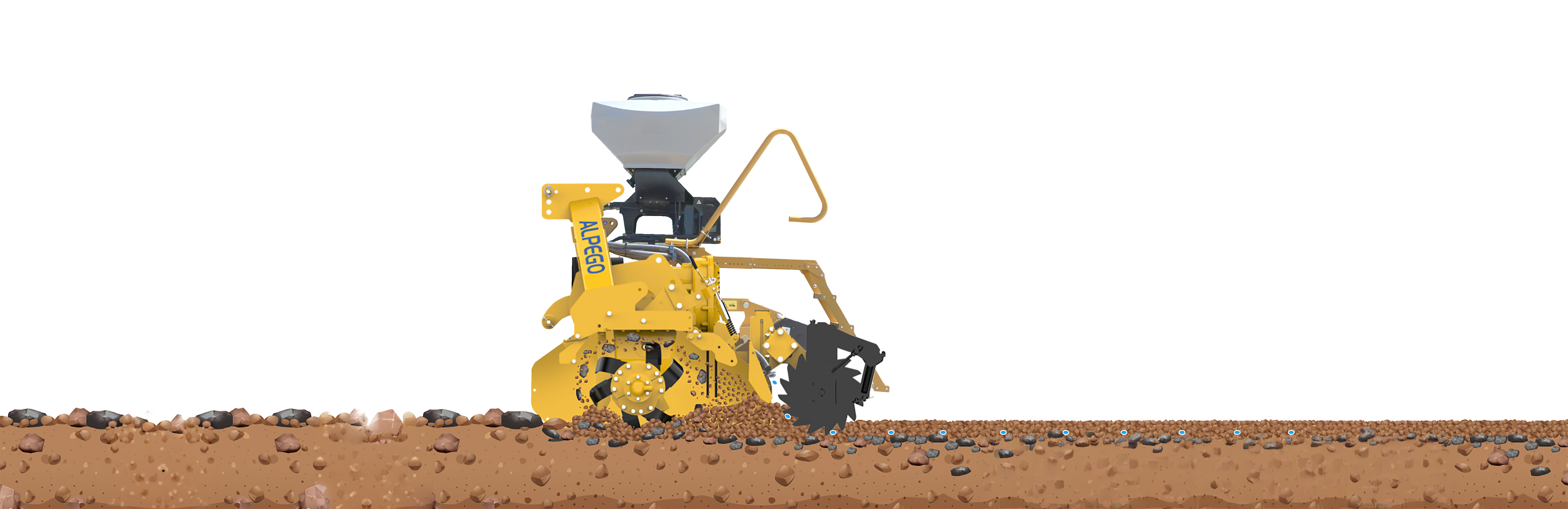
Fig.1. INVERSA stone burier with seeder diagram, showing the sorting of stones to create a well-draining seedbed and fine soils on the surface where seeds are placed before a roller.
“With fuel at such a high price, farmers are on the lookout for reducing costs and simplifying grassland reseeds” comments Glenn Bootman, Alpego Product Manager. “By using the INVERSA fitted with a Stocks seeder, all the jobs involved in a traditional approach are combined reducing the intensity of the operation, significantly reducing labour requirements and fuel consumption.”
Traditional reseeding typically requires multiple passes with a plough, power harrow, rolls, a harrow and seeder. The job is then finished off with another pass from the rolls, to achieve good seed-to-soil contact, resulting in high labour and fuel costs. As shown in the figures below, the INVERSA and seeder combination conglomerates these multiple passes into one, which can result in significant savings of between 35% and 41% to the farm.
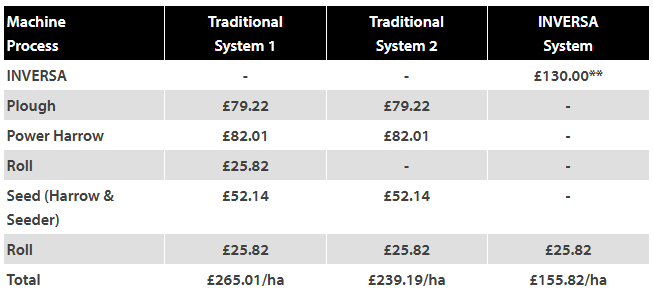
Fig.2.Table showing two traditional methods of reseeding grassland vs the INVERSA system. *Figures from Nix Farm Management Pocketbook 2026, 56th edition, contractor’s charge. ** £123 for INVERSA £7 for seeder, contractor’s charge.
Seeding benefits
- One pass seeding
- Creates the ideal seedbed
- Fuel and time saving compared to traditional plough-based cultivation methods
- Fewer passes = reduced compaction
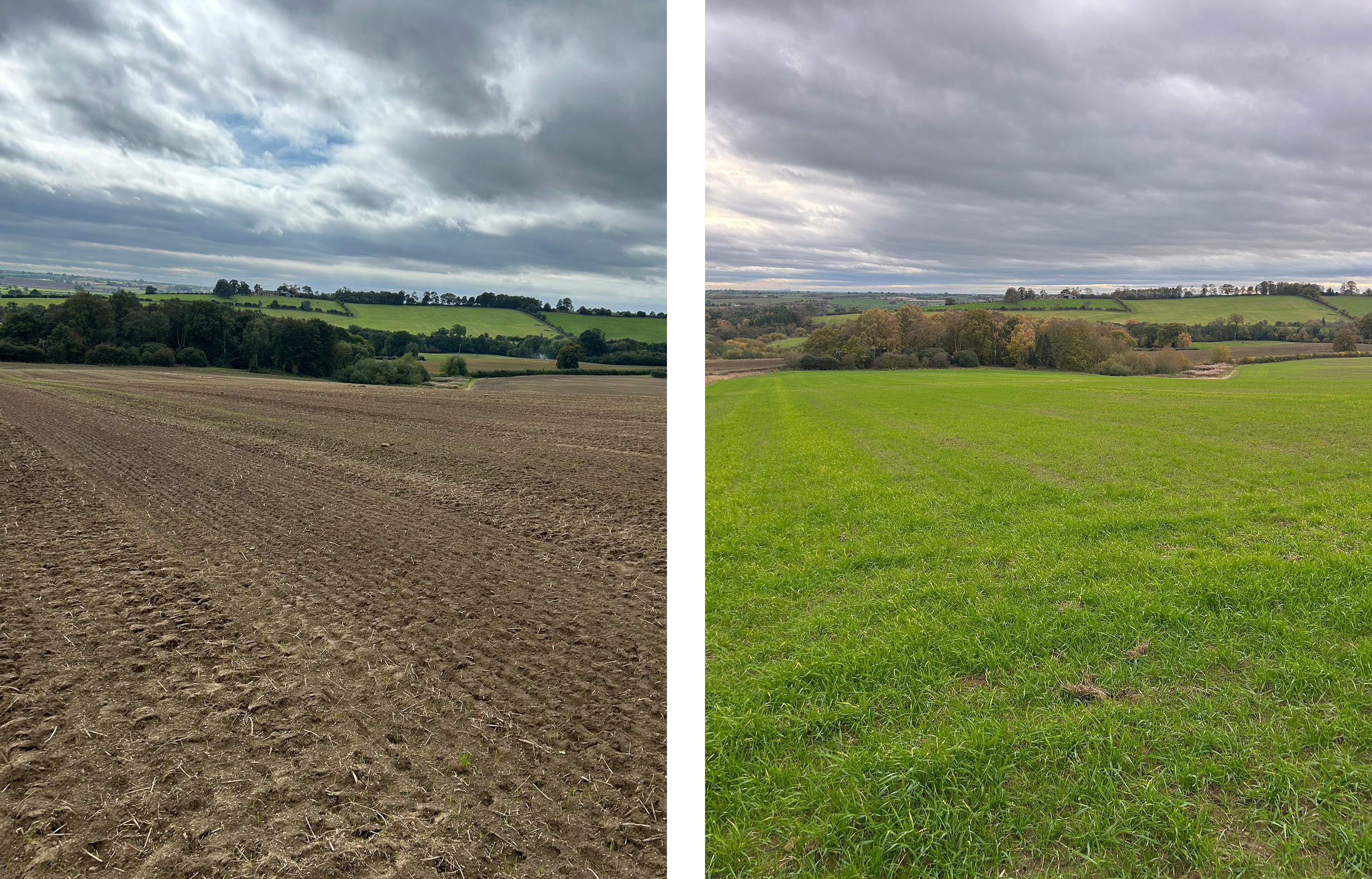
Fig. 3.Before and after photos of field seeded with the Alpego INVERSA and seeder.
About the Alpego INVERSA
Based on the Italian manufacturer’s time-proven rotary tiller – or rotavator – range, INVERSA models have some key features that make them capable of creating a friable seedbed even in stoney soil.
Rotating in reverse to the conventional rotavator direction, the heavy-duty rotor lifts soil and carries it over the top of the rotor, propelling it through two rows of spring-loaded screening tines. Working in combination with an adjustable levelling bar, this set-up ensures stones, clods and crop residue drop first to the bottom of the worked pass and are then covered by the layer of finer soil that has passed through the tines.
Not only does this create a fine tilth ideal for seed germination and emergence, the buried layer of stones provides sub-surface drainage for growing crops without limiting their capacity to access moisture at depth. These well-structured seedbeds have the ideal combination of permeability and an ability to remain stable throughout the growing season, giving crops the best possible chance to meet their yield potential.
What sets all Alpego rotary tillers apart from the competition is the company’s unique centre-drive system. Rather than power being transferred to the rotor via a series of gears or chains and sprockets at one end of the rotor, a slimline geartrain transfers drive to the middle of the rotor.
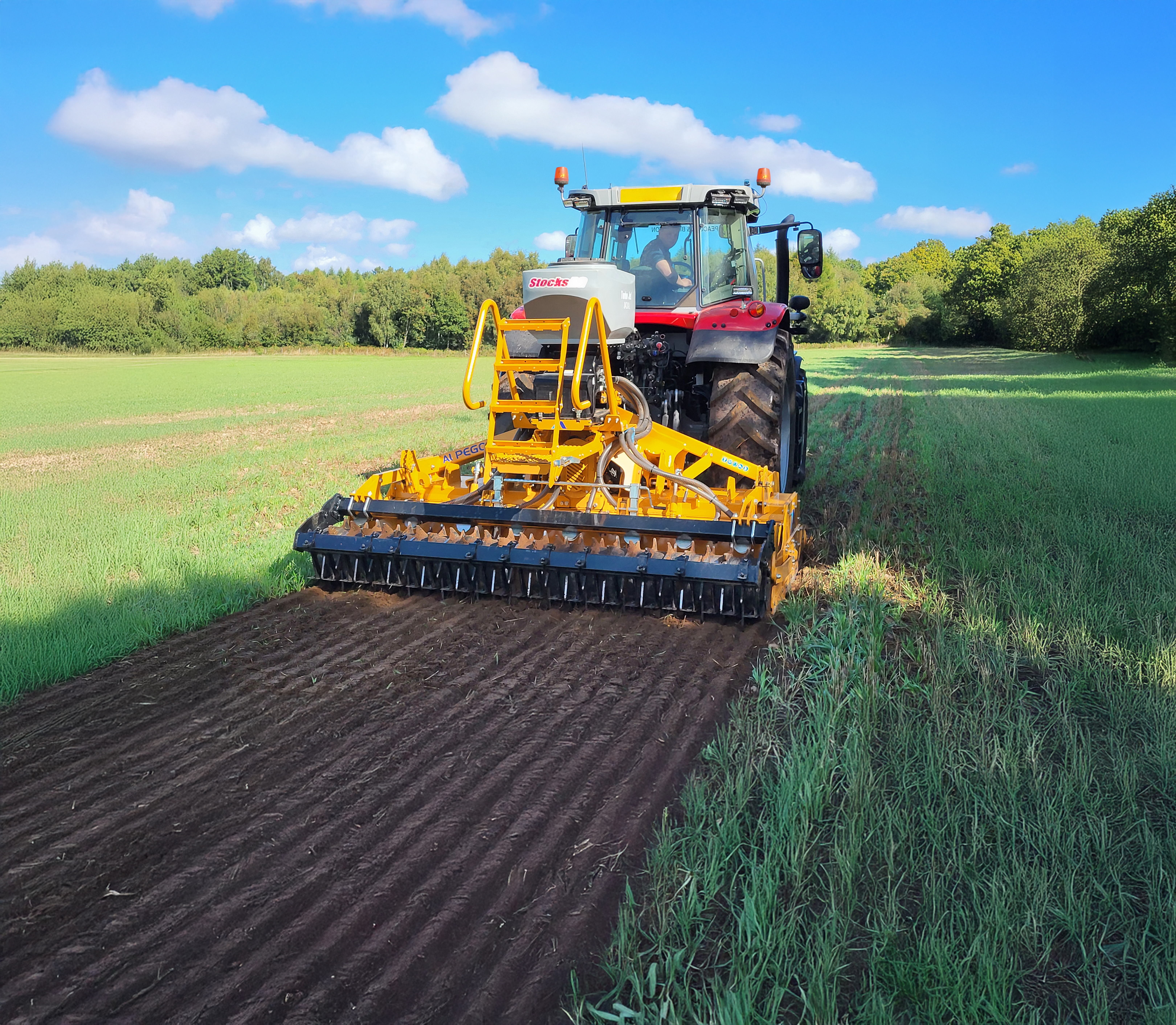
Fig. 4. Alpego INVERSA with Seeder
This ultimately has a number of advantages. Primarily it means torque loadings are transferred equally to either side of the machine, reducing strains and stresses on the entire driveline. In addition, by having four support bearings for the rotor – rather than just one at each end – the opportunity for shaft flex under load is drastically reduced providing long term reliability.
Without transfer casing on one end of the machine, Alpego rotovators’ working widths are increased which maximises output. This also means they can run right up against fences and other obstacles in either direction of travel.
Having a centralised driveline also avoids uneven weight distribution left-to-right, helping to ensure a consistent working depth across the width of the machine.
There are three versions of the INVERSA. The 2.5-3m IG range for tractors from 90-170hp and 3-4m IZ variants rated for 140hp to 280hp. Finally, the flagship hydraulic folding Poker range spans 3.6m to 5m working widths and will handle up to 260hp. In addition, seeder mounting kits are particularly popular for those wishing to reseed fields that cannot be ploughed due to shallow soil. All the seeders are available with a choice of metering rollers and other options including hydraulic depth adjustment on the IG model. Alpego INVERSA’s are the ideal one-pass reseeding tool, creating an ideal tilth without the need for multiple cultivation passes.